Are On Cloud Shoes Good for Runner's Knee?
Yes — certain On Cloud models can help reduce Runner's Knee (patellofemoral pain syndrome) when the cause is overpronation, impact stress, or poor alignment during repetitive movement.
Runner's Knee typically develops from:
- Repetitive knee joint loading
- Inward knee tracking (valgus collapse)
- Weak arch support
- Hard running surfaces
- High step counts
Because the kneecap tracks over the femur during every stride, improper foot mechanics increase joint irritation.
Shoes that reduce impact and stabilize alignment can significantly lower patellar stress.
What Causes Runner's Knee?
Runner's Knee is usually linked to:
- Overpronation
- Flat feet
- Hip instability
- Hard pavement running
- Sudden mileage increases
Footwear influences how force travels from the foot into the knee joint.
When alignment fails, the kneecap tracks improperly — increasing pain over time.
🏆 Best On Cloud Models for Runner's Knee
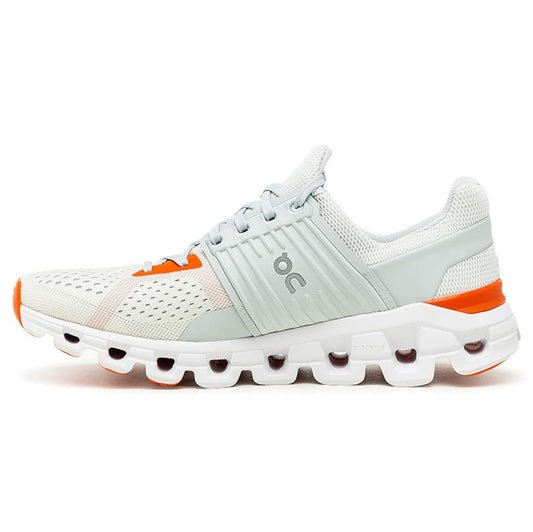
🥇 Cloudflyer 5 — Best for Overpronation-Related Runner's Knee
Check Price on Amazon (Cloudflyer 5)
Best For: Flat feet, inward knee tracking
- Reinforced arch structure
- Strong pronation control
- Stable heel containment
- Structured ride platform
If your Runner's Knee is driven by inward knee collapse, stability correction is critical. The Cloudflyer 5 provides the strongest alignment control in the On lineup.
🥈 Cloudrunner 3 — Best Balanced Stability + Cushioning
Check Price on Amazon (Cloudrunner 3)
Best For: Mild pronation with moderate mileage
- Cushioned yet structured ride
- Moderate pronation guidance
- Durable midsole
Provides controlled support without feeling overly rigid.
🥉 Cloudmonster 2 — Best for Impact-Driven Runner's Knee
Check Price on Amazon (Cloudmonster 2)
Best For: Pavement running, long mileage
- Deep Helion™ cushioning
- Thick CloudTec® pods
- Wide landing base
If knee pain increases on concrete or asphalt, shock absorption becomes essential.
Cloudsurfer Max — Best for High-Mileage Efficiency
Check Price on Amazon (Cloudsurfer Max)
- Smooth rocker geometry
- Efficient heel-to-toe transition
- Reduced fatigue buildup
Helps maintain smoother stride mechanics over distance.
Stability vs Cushioning for Runner's Knee
If Your Pain Is Alignment-Driven:
Choose strong stability.
→ Cloudflyer 5
If Your Pain Is Impact-Driven:
Choose maximum cushioning.
→ Cloudmonster 2
If It's Mixed:
Choose balanced support.
→ Cloudrunner 3
Check Price on Amazon (Cloudflyer 5)
Running Surface Considerations
- Pavement → Prioritize cushioning
- Track → Balanced support
- Treadmill → Moderate cushioning sufficient
Repeated impact on hard surfaces increases patellar compression.
Signs Your Shoes May Be Worsening Runner's Knee
- Pain under or around kneecap
- Pain increases during downhill running
- Knee stiffness after activity
- Shoes feel compressed or unstable
Replacing worn-out midsoles often reduces knee irritation quickly.
FAQs
Which On shoe is best for Runner's Knee?
Cloudflyer 5 for stability-driven pain, Cloudmonster 2 for impact-driven pain.
Does cushioning reduce Runner's Knee pain?
Yes — especially on hard running surfaces.
Do I need stability for Runner's Knee?
If overpronating, stability significantly improves knee tracking.
Are On shoes good for long-distance running?
Yes — especially models with durable Helion™ foam.
Final Verdict
For Runner's Knee, the best On Cloud shoe depends on the root cause of your discomfort.
- Inward knee tracking → Cloudflyer 5
- Pavement impact compression → Cloudmonster 2
- Mixed mechanics → Cloudrunner 3
- High-mileage stride fatigue → Cloudsurfer Max
Matching your shoe to your biomechanics reduces patellar strain and improves long-term comfort.
Check Price on Amazon (Cloudflyer 5)